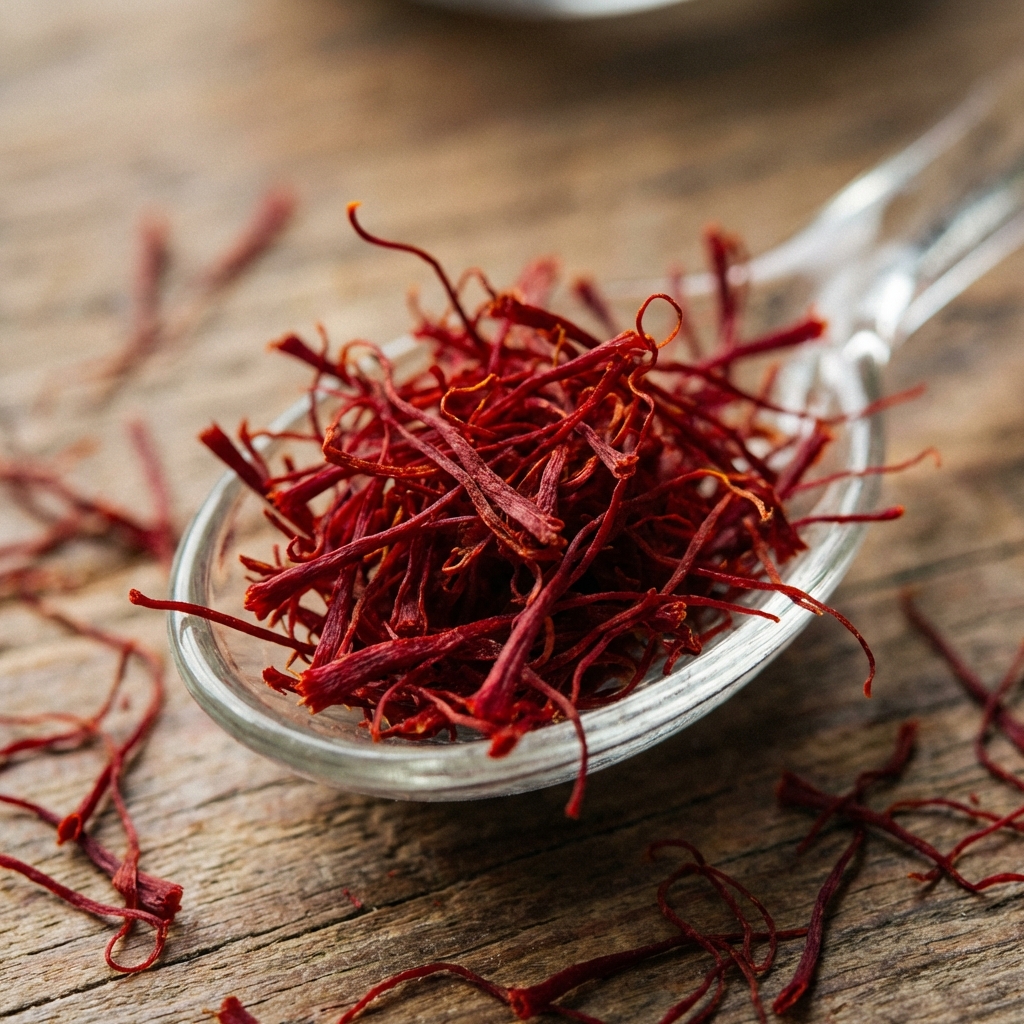
The Visual Test: Red vs. Yellow
The most immediate indicator of quality is color. Saffron threads are made up of the red stigma and the yellow style. Premium grades like Mogra (Kashmiri) or Super Negin remove the yellow style entirely, leaving only the deep red stigma.
Rule of Thumb: If you see a lot of yellow or white towards the bottom of the threads in "Premium" packs, you are paying for weight that has no flavor or color value.
The Water Test
A classic way to spot fake saffron usually colored with artificial dyes:
Real vs Fake Saffron — Quick Identification Guide
| Test | ✅ Real Saffron | ❌ Fake / Adulterated Saffron |
|---|---|---|
| Water Test | Slowly releases golden-yellow hue over 10–15 minutes; threads remain red | Instantly releases color (often reddish); threads lose color and turn white |
| Color | Deep red stigma; golden-yellow style base; no orange or brown tones | Uniform dull red/orange throughout; no natural color gradient |
| Aroma | Strong, complex scent — sweet, earthy, hay-like; smells sweet but tastes bitter | Faint or chemical smell; tastes sweet (glycerin/honey added for weight) |
| Thread Structure | Trumpet-shaped at one end; slightly serrated edges; no yellow threads in Mongra | Uniform cylindrical; may include yellow styles mixed in even in 'premium' packs |
| Texture | Slightly brittle when dry; plumps up in warm water | May feel plasticky, oily, or overly flexible |
The Aroma Profile
Quality saffron hits you with a strong scent immediately upon opening the jar. It should be sweet but earthy, often described as a mix of honey and hay. Ideally, it smells sweet but tastes bitter. If it tastes sweet, it has likely been dipped in glycerin or honey to add weight.
ISO 3632 Certification
For B2B buyers, sensory tests aren't enough. You need lab verification. The ISO 3632 standard grades saffron into three categories based on three key parameters:
ISO 3632 — Saffron Quality Grade Comparison
| Parameter | What It Measures | Grade I (Premium) | Grade II | Grade III |
|---|---|---|---|---|
| Crocin | Color strength | > 190 | 150–190 | 100–150 |
| Picrocrocin | Flavor / Bitterness | > 70 | 55–70 | 40–55 |
| Safranal | Aroma intensity | 20–50 | 20–50 | 20–50 |
At Pravaha International, every bulk shipment is accompanied by a Certificate of Analysis confirming ISO Grade 1 parameters.
The Buyer's Certification Checklist
Before accepting any bulk shipment, verify these documents exist and are current:
- GI Certificate — Issued by IIKSTC. Confirms origin as Kashmir. Mandatory for Mongra grade.
- NABL Lab Report (CoA) — Batch-specific Certificate of Analysis confirming Crocin (>190), Picrocrocin (>70), Safranal (20–50) per ISO 3632 Grade I.
- Phytosanitary Certificate — Issued by Indian plant quarantine authorities. Required for all saffron exports.
- APEDA Shipping Bill — Confirms the exporter is APEDA-registered for agricultural produce exports.
- Certificate of Origin — Confirms country of origin as India for customs clearance in destination country.
- Visual Inspection — Deep red stigma, no yellow threads (for Mongra), characteristic hay-like aroma upon opening.